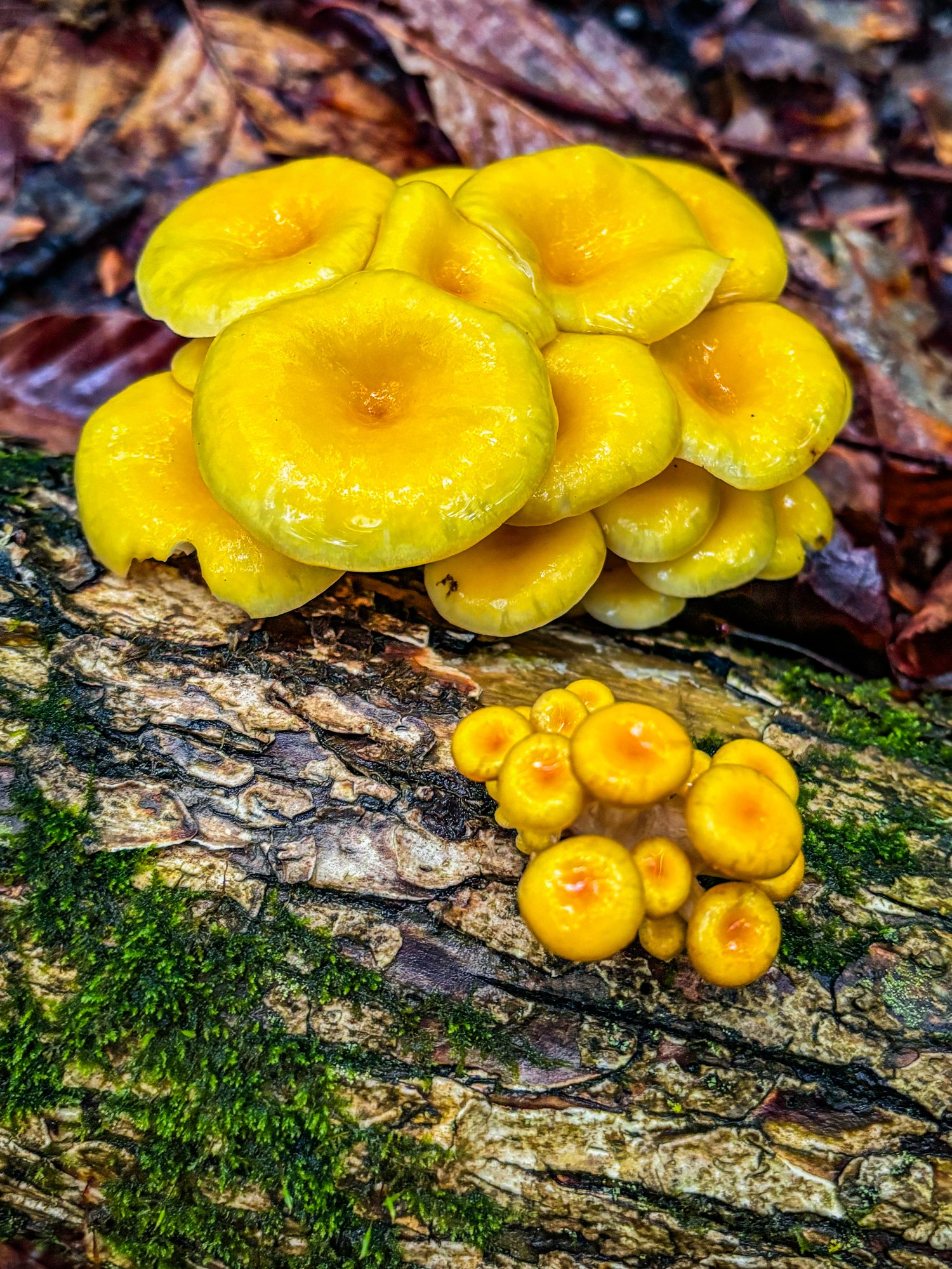

Pleurotus citinopileatus, the Golden Oyster, is native to East Asia and is now established in the wild across much of the Northeastern United States, where they've escaped cultivation and naturalized in our forests.
In Upstate New York, they're a season-long find (though most prolific in the late spring and early summer), invasive, but entirely edible and genuinely delicious. Pleurotus species are cultivated easily and found in farmers markets across the globe; you may have even tried some Oysters! Golden Oysters are mild, a bit nutty, and have an excellent texture.
Golden Oysters are mild, versatile, tender, and hold well to cooking and braising. If you crave a versatile mushroom that's easy to clean and cook with a pleasing texture, look no further than this delicious Pleurotus.
Golden Oysters have particular affinities for the following combinations:
golden oysters + brown butter + hazelnut + sage
and
golden oysters + white wine + shallot + parsley
and
golden oysters + soy sauce + garlic + ginger + sesame
and
golden oysters + corn + chive + cream + smoked paprika
We also find Golden Oysters fantastic with potatoes, corn, and sauteed atop proteins like steak.
Below, find a few recipes for your inspiration.
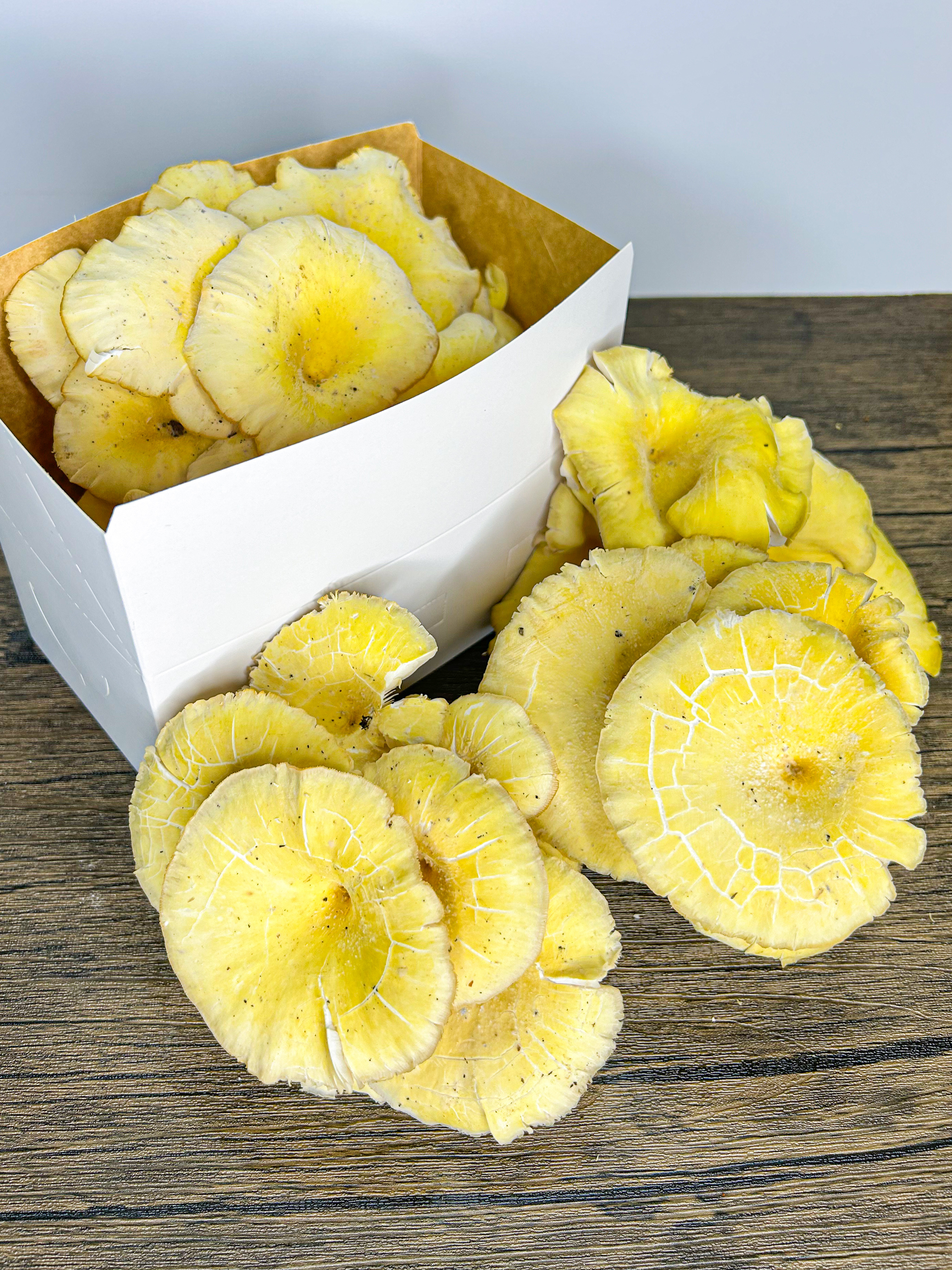
Use caution when consuming wild foods. No mushroom will harm you by touching it, smelling it, or even licking it. It is the actual swallowing and consumption we want to be aware of.
That being said, 99% of edible wild mushrooms should be thoroughly cooked before consuming to avoid gastrointestinal distress. If you're unsure how an edible mushroom will affect you, try a small amount and wait several hours before trying more, to see how your body reacts.
Fresh mushrooms should be stored in a cool, dry place, around 38°-42°F. Field cleaning your mushrooms is the best way to keep them tidy and limit your prep work later. Do not rinse mushrooms in water until you're ready to use them; this helps prevent rot and lengthen their freshness.
Should you choose to dehydrate your mushrooms, please note that your finished product is still considered raw, and should be cooked before consuming.