Private Foraging Experience with Albany Presbytery

June 5, 2026 | Silver Bay

 "Because of the Lord's great love we are not consumed, for his compassions never fail. They are new every morning; great is your faithfulness."

—Lamentations 3:22-23

The poet of Lamentations found renewal not in spite of the wilderness, but within it—and there's something quietly profound about that image when you're standing in the woods, watching the forest offer up something new. Mushrooms fruit after rain. Berries ripen on their own schedule. The land keeps its own kind of faithfulness, season after season, whether we're paying attention or not. It was a joy to share that with the Albany Presbytery community at Silver Bay—to slow down, look closely, and discover what was already there, waiting to be found. Thank you for having us. We hope a little of the forest comes home with you.


What did we find?

We're so grateful to have shared in this very special Experience with you. As you know, so many factors come into a successful hunt—and that success means so many different things to each and every one of us. While we did not leave with bagfuls of food, we certainly left with hearts full of our faith in God's Covenant of renewal. The forest and the land has provided in the past: We saw those clues! The forest and the land will also provide in the future.

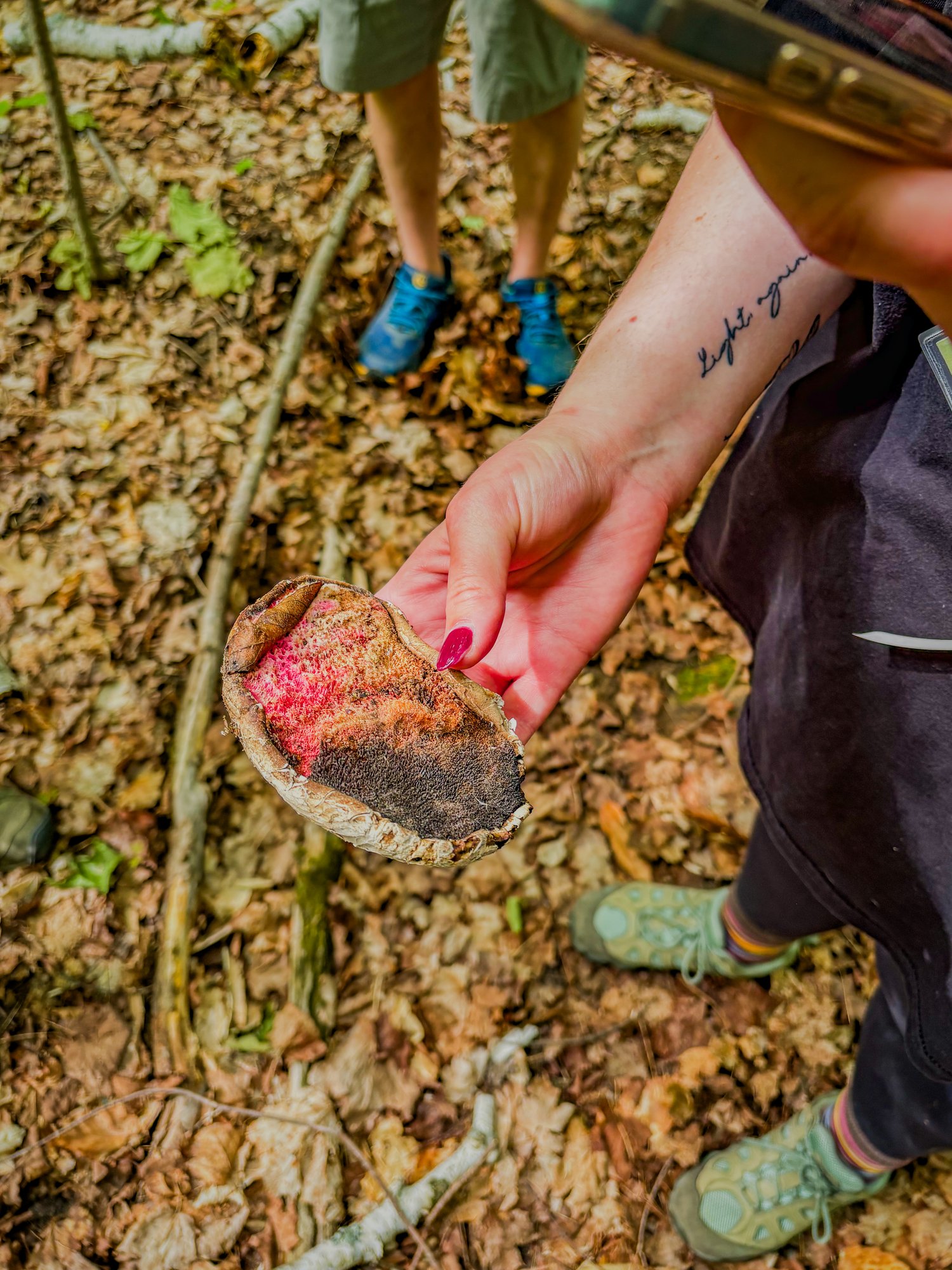
Here are a few of the things we saw on our foray:

IMG_0375
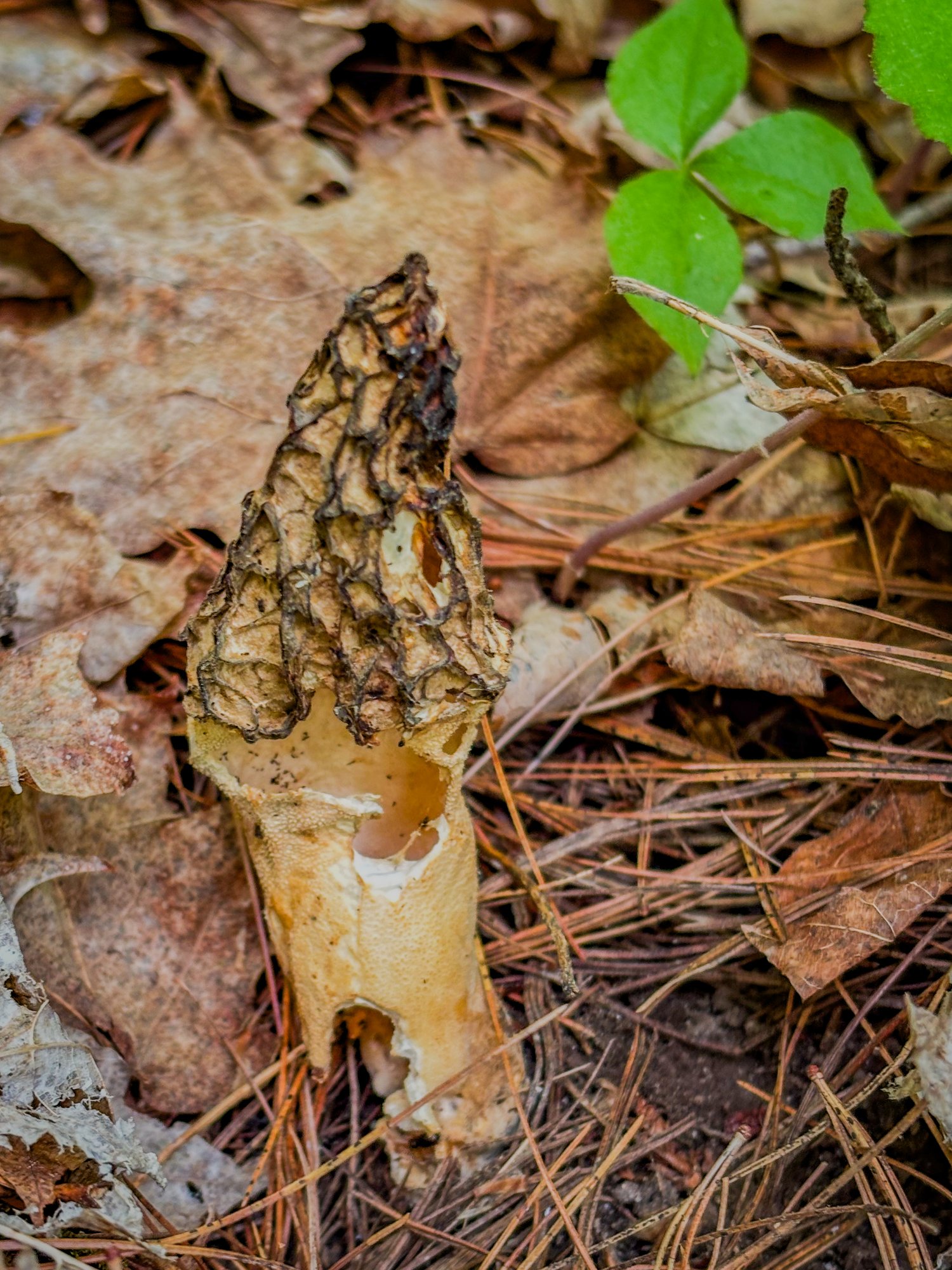
Morchella spp.

Morel

  • Morels are a type of cup fungus, most recognizable by its cone-shaped cap, which has a honeycomb-like appearance and texture
  • White stipe
  • Entire mushroom, cap to stipe, will be hollow when sliced open
  • Off-white spore print
  • Possibly saprobic and mychorrhizal during certain parts of its life cycle
  • Generally grows as individuals or scattered, in the ground
  • Morels are found in a variety of ecosystems, including near dead or dying ash or elm trees, tulip poplars, in apple orchards, and in your front yard
  • Early spring choice edible, flushing around May and June

IMG_0397
Pleurotus ostreatus

White/Pearl Oysters

  • Broad, fan or oyster-shaped cap that ranges in color in the wild from white to gray or brown
  • White-to-yellowish, decurrent gills that run down a white stipe that has an off-centered attachment to the cap
  • White-to-lilac gray spore print; try taking this mushroom's print on dark paper
  • Thick, white flesh that remains unchanged when sliced
  • Distinctive anise- or bitter almond-like smell
  • Grows directly on wood, in shelflike clusters
  • Saprotrophic: White oysters grow on a variety of decaying wood, especially hardwoods, and assist in actively breaking it down
  • Oyster mushrooms are also carnivorous; its mycelia can kill and digest nematodes and bacteria!
  • In-season late fall to early spring
  • A choice gourmet edible

IMG_0388
Fomitopsis betulina

Birch Polypore

  • Saprobic on the deadwood of birch trees, sometimes reported as parasitic on living trees
  • Grows alone or gregariously; annual
  • Cap begins lumplike, and matures to a broad, convex, smooth, whitish-to-brown-to-dull brown, with a thick margin
  • White to gray to brownish pores; no bruising
  • Absent or stubby stem
  • White flesh that is thick and corky
  • Strong scent and bitter taste

IMG_0403
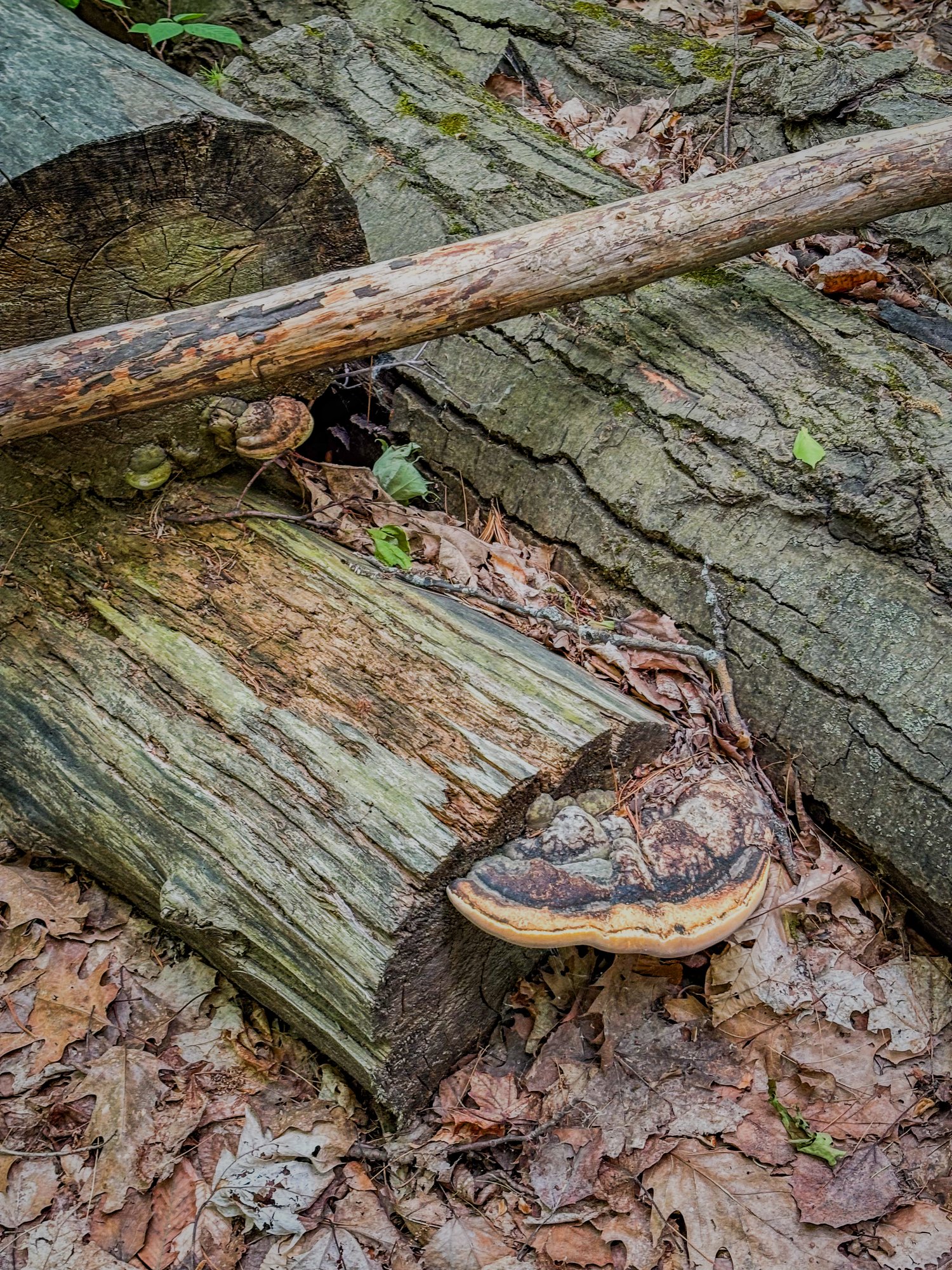
Fomes fomentarius

Hoof Fungus

  • Tough perennial polypore that usually becomes hoof-shaped with age
  • Found on standing and fallen hardwoods, especially birch and beech
  • Woody upper surface develops grayish zones
  • Tiny pores on brown surface
  • Along with Piptoporus betulinus, Fomes fomentarius is one of two mushrooms that the Tyrolean Iceman was carrying around 5000 years ago. He apparently used Fomes fomentarius as tinder

afa74adc-bfe9-4445-99e8-557aef7318fa julie montalbano
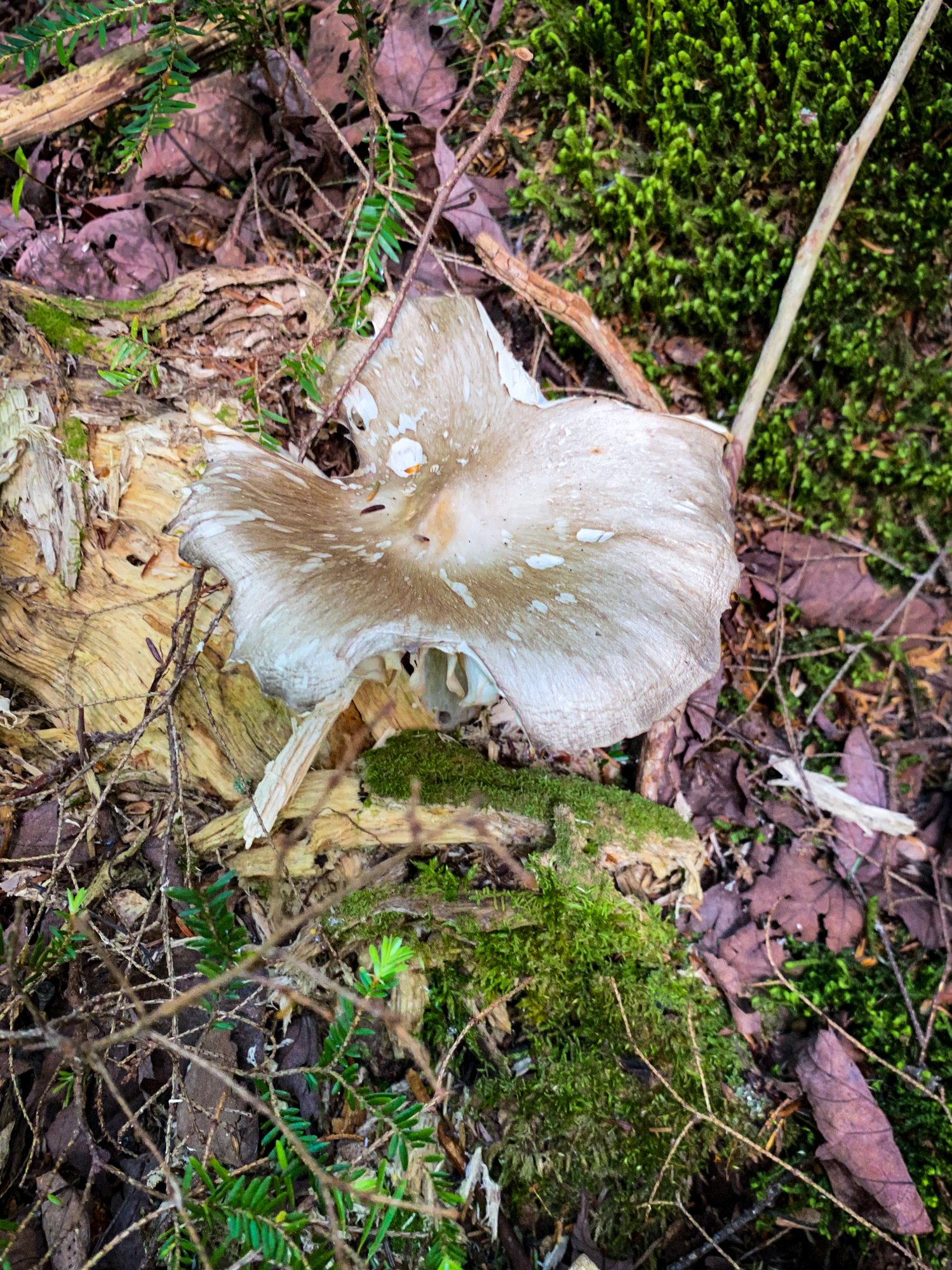
Megacollybia rodmanii

Broadgills

  • Saprobic; solitary to several on and near deciduous logs, stumps, wood debris or on ground from buried wood
  • Fungus with one of the longer seasons, from May through October, so when we see rodmaniis, we know it's time to forage!
  • Gills Attached; white; broad; edges uneven to ragged, appearing eroded
  • White spore print
  • White, smooth, often with white rhizomorphs
    present at the base
  • We don't recommend consuming rodmanii

Notes on consumption and more

As they say, all mushrooms are edible once.

Use caution when consuming wild foods. No mushroom will harm you by touching it, smelling it, or even licking it. It is the actual swallowing and consumption we want to be aware of.

That being said, 99% of edible wild mushrooms should be thoroughly cooked before consuming to avoid gastrointestinal distress. If you're unsure how an edible mushroom will affect you, try a small amount and wait several hours before trying more, to see how your body reacts.

Fresh mushrooms should be stored in a cool, dry place, around 38°-42°F. Field cleaning your mushrooms is the best way to keep them tidy and limit your prep work later. Do not rinse mushrooms in water until you're ready to use them; this helps prevent rot and lengthen their freshness.

Should you choose to dehydrate your mushrooms, please note that your finished product is still considered raw, and should be cooked before consuming.
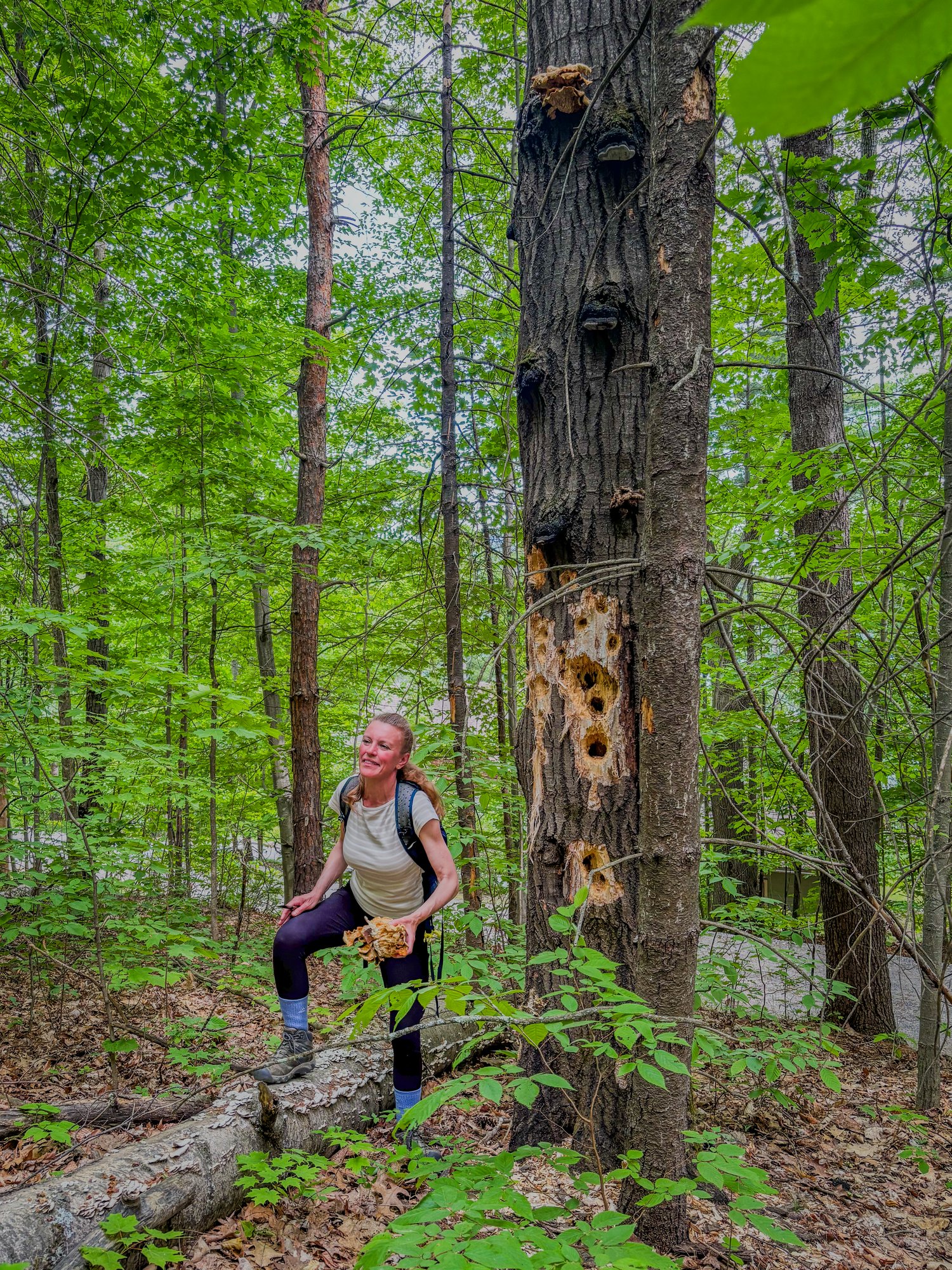
More highlights from this experience

Did this event look fun to you? Subscribe to learn about future ones!